







Search Results for: merchant cost
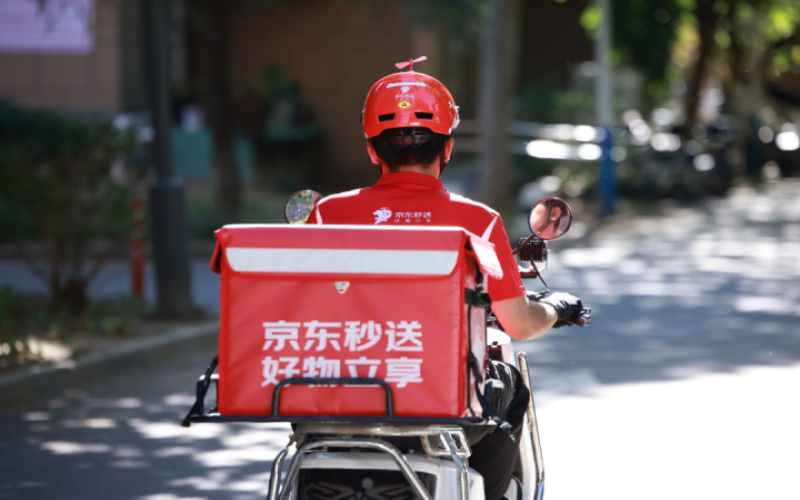
Changes to JD Takeaway's subsidy rules spark merchant discontent, Grid Coffee founder Chen Ziyu speaks out in criticism
Recently, JD Delivery adjusted the cost-sharing method for its "10 Billion Subsidy" campaign, changing it from being fully borne by the platform to a 50-50 split with merchants, which sparked strong backlash from many participating merchants. Many merchants reported that the new rules not only severely squeezed their profit margins but also exposed them to pressure such as forced participation and traffic downgrading, with some orders even generating negative revenue. Chen Ziyu, the owner of the coffee chain brand Grid Coffee, publicly called out, "Stop it, Ah Dong," pushing the conflict into the spotlight of public opinion. As the incident continues to escalate, the trust relationship between merchants and the platform is facing a severe test. [more…]
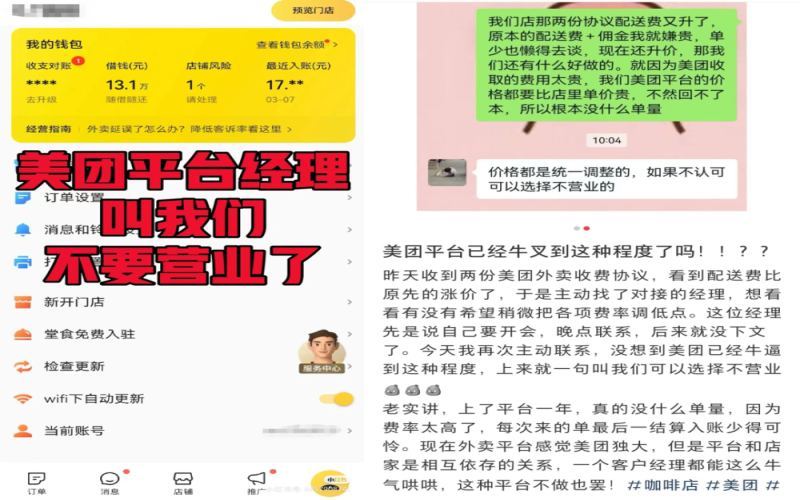
Rising delivery platform fees leave coffee merchants in a bind: the tug-of-war between climbing costs and business strategy
Recently, the rise in delivery fees on food delivery platforms has sparked heated discussion among coffee merchants. Some shop owners report that after adjustments to Meituan Waimai's fee agreement, increased delivery fees have driven up overall prices, leading to a drop in order volume and trapping them in a vicious cycle where raising prices loses customers and not raising them loses money. Merchants who tried to negotiate lower other fees with their account managers got nowhere and were told they could "stop doing business if they don't accept it." Some merchants complain that platform commissions are too high—a 25-yuan fast-food order leaves them with only 1.24 yuan, and some even end up with negative income. Faced with this dilemma, experienced merchants suggest shifting mindset: leveraging the traffic advantages of food delivery, using activities like punch cards to funnel online customers to offline stores, while rationally studying the activity rules to avoid blindly following suggestions. Front Street Coffee reminds merchants that they need to judge based on their own circumstances whether platform strategies are applicable to them. [more…]
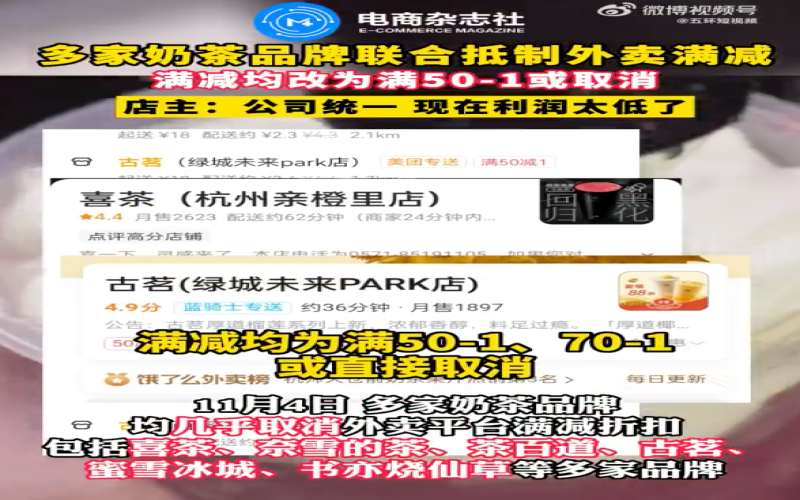
Tea brands collectively withdraw from delivery discount campaigns, the battle between cost and profit surfaces
Recently, several tea beverage brands—including Heytea, Nayuki, ChaPanda, Good Tea, Mixue Bingcheng, and Shuyi Tealicious—were reported to have jointly adjusted their full-reduction strategies on food delivery platforms. The original full-reduction discounts have been uniformly changed to 1 off 50, 1 off 70, or even canceled outright. Once the news broke, related topics quickly trended on social media, with views exceeding 180 million. Merchants say profits are thin, while netizens question why milk tea, which isn't cheap, still isn't making money. Behind this controversy lie both the pressure of platform commissions and delivery costs, and a reflection of the difficult position of the new tea beverage industry, caught between price cuts and losses. [more…]

Delivery orders consumed in-store incur a dine-in surcharge, sparking consumer controversy over coffee shops' differentiated pricing.
Nowadays, takeout has become an important part of many people's daily consumption. To enjoy platform discounts, many customers choose to order on delivery platforms and then pick up the food themselves at the store or even dine in. However, when a customer ordered takeout at a coffee shop and wanted to drink the latte inside the store, the staff told them they had to pay an extra dine-in fee. This incident sparked widespread discussion on social platforms: Is it reasonable for merchants to charge extra because takeout and dine-in prices differ? How should the consumer experience be safeguarded? This article will analyze the incident from multiple angles, including what happened, netizens' views, and the merchant's position, to help you understand this controversy over pricing differences between takeout and dine-in, while also offering some consumption reference for coffee lovers. [more…]
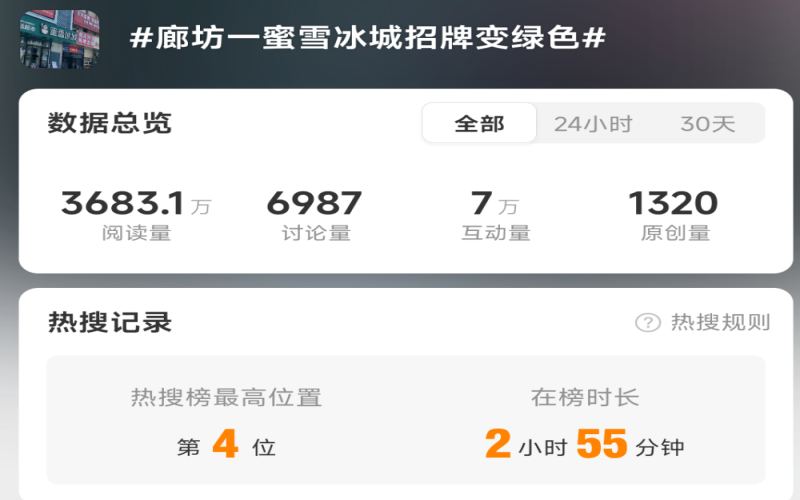
Sanhe City Signage Color Change Controversy: Mixue Bingcheng Required to Change to Green, Red, Blue, and Black Backgrounds Banned
Recently, a notice in Yanjiao, Sanhe, Hebei regarding the color rectification of merchant signs has drawn attention. The local urban management department verbally notified merchants that red, blue, and black storefront signs must be changed to other colors, and the costs of removal and replacement must be borne by the merchants themselves. Signboards of brand stores such as Mixue Bingcheng were forced to change to green or gray-black, and the incident quickly topped Weibo's trending searches. The Sanhe City Urban Management Bureau responded that this move was one step ahead in accordance with urban planning, but the relevant documents had not yet been issued. The similar phenomenon of "unified store signs" is not an isolated case, and this time targeting only common basic commercial color schemes not only lacks sufficient justification but also weakens brand recognition, sparking widespread controversy. [more…]
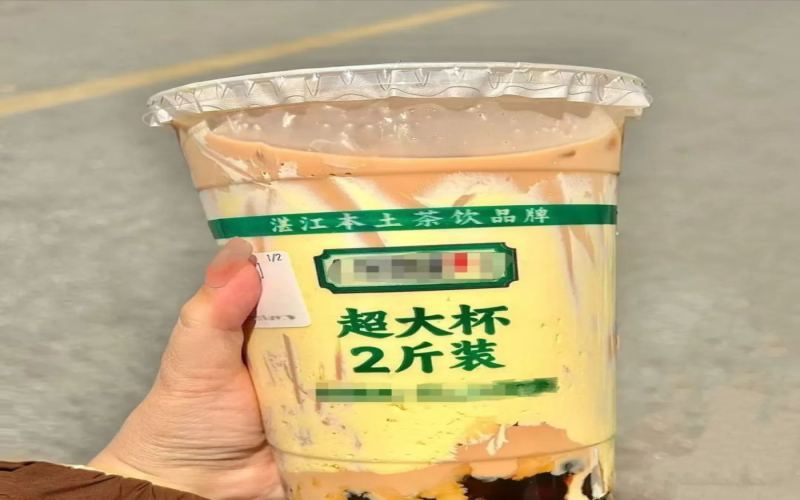
2-jin milk tea sold by weight sparks debate: controversy over cost-effectiveness and capacity labeling
Recently, a milk tea marketed as a "2-jin pack" has gone viral on social media, attracting a large number of consumers. The product was launched by a local tea beverage brand in Zhanjiang, priced at 18 yuan, or about 10 yuan after discounts, and has tapped into the consumer psychology of pursuing value for money with its large capacity and low price. However, along with the popularity came controversy: some consumers pointed out that 2 jin is roughly equivalent to 1000ml, and compared with the 500-700ml large cups of milk tea on the market, the actual value for money may not be outstanding, and merchants should label the capacity truthfully. In addition, similar products have already appeared in Nanning, Guangxi, and the originality of the idea has also sparked discussion. Some people are also worried that oversized milk tea may cause food waste. As coffee lovers, Front Street Coffee has also noticed the consumer trends and industry reflections behind this phenomenon. [more…]

Red Sea Crisis Escalates into 2025: Houthi Attacks on Merchant Ships Strain Coffee Trade and Global Logistics
The Houthi armed forces in Yemen continue to launch attacks in the Red Sea and Indian Ocean, and claim to have struck targets in Israel, causing the situation in the Red Sea to escalate continuously. Multiple international shipping giants have judged that the region will still be unsafe in 2025 and decided to continue diverting around the Cape of Good Hope. Longer voyages and port congestion are driving up global logistics costs. As an industry highly dependent on maritime shipping, the coffee trade is bearing the brunt. Freight rates on Europe-Asia routes have soared, and combined with production cuts in many countries, international coffee prices have continued to surge. This article will review the attack incidents, the shipping impact, and coffee market developments, and also pay attention to the challenges facing brands such as Front Street Coffee. [more…]
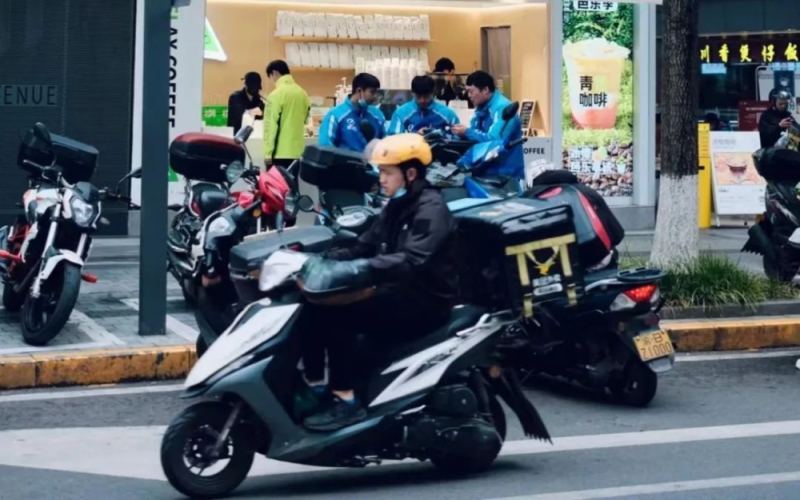
A Practical Guide to Coffee Shop Delivery Operations: A Complete Approach from Pricing Strategy to Private Domain Retention
While delivery platforms bring orders to coffee shops, they also carry the hidden risk of brand devaluation. Many shop owners have found that blindly joining price wars not only makes profitability difficult but can also erode the store's brand value. This article systematically sorts out the key aspects of coffee shop delivery operations, from pre-opening pricing planning, accumulating Dianping ratings, and delivery menu strategies, to how to convert platform traffic into private-domain customers. It also emphasizes that independent coffee shops should differentiate themselves from chain brands through professional quality and service details, rather than getting caught in low-price involution. The article also shares practical techniques such as stamp cards and scratch cards to guide delivery customers to offline visits, helping coffee shops effectively attract traffic through delivery while maintaining their brand tone. [more…]
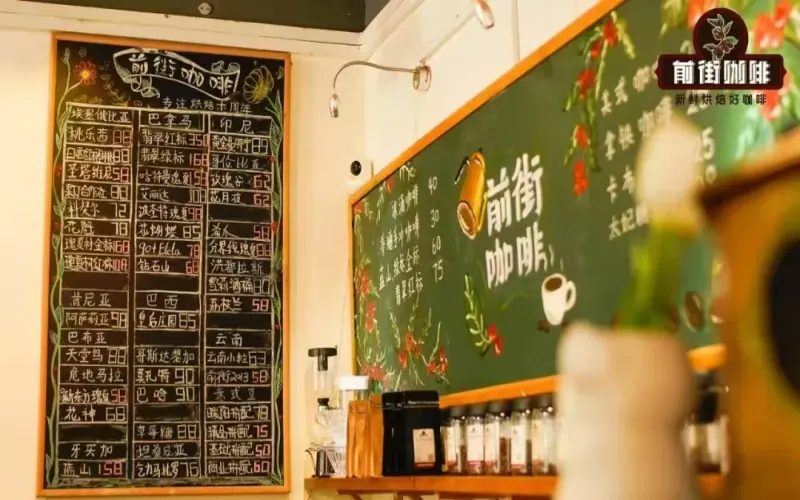
Does a higher number of coffee beans in a blend mean better quality? Analyzing the blending logic and experimental verification of mixed coffee
Many friends who are just getting into coffee have a question: which is actually better, blended coffee or single-origin coffee? Does using more types of beans in a blend make it more impressive? Because some merchants heavily promote blends of four or even more types, many beginners mistakenly believe that the number of bean varieties in a blend is directly tied to its quality. In fact, the core of blended coffee lies in the complementary characteristics and proportional adjustment among the beans, not simply piling up varieties. In this article, Front Street will systematically explain what blended coffee is, what problems it can solve that single-origin beans find hard to achieve, and, through a brewing experiment using more than thirty kinds of coffee beans, intuitively demonstrate why more beans in a blend is not necessarily better, as well as why merchants generally keep blends to 2~5 types at present. [more…]
Legal Interpretation of the Luckin Low-Price Order Incident: Consumer Red Lines and Platform Liability Under System Vulnerabilities
The unusual pricing incident involving Luckin Coffee's delivery platform packages has drawn widespread attention. After consumers placed orders at extremely low prices, their orders were unilaterally cancelled, giving rise to legal disputes. Citing the views of a legal blogger, the People's Court Daily pointed out that when a merchant's pricing error results from staff mistakes, the merchant may claim a major misunderstanding to rescind the contract, but this must be resolved through litigation or negotiation. Ordinary consumers who unintentionally buy low-priced drinks have not broken the law, but those who knowingly exploit a system loophole and maliciously place large numbers of orders may run afoul of the law. This article will analyze the course of events, the legal basis, and Luckin's compensation measures in detail, while reminding coffee lovers that when enjoying discounts they must hold fast to the bottom line of good faith and avoid crossing the red line of the law. [more…]
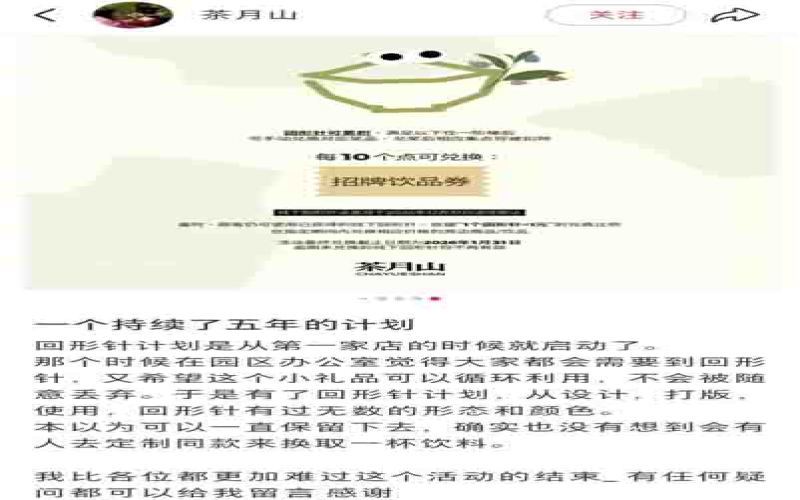
Tea brand's stamp-collecting paperclip copied by imitators, five-year campaign forced to end and move online
A Guangdong chain beverage brand has reluctantly ended its five-year paperclip loyalty program after discovering that people were using custom paperclips of the same design bought online to redeem drinks in stores. What was meant as a physical giveaway to reward loyal customers was exploited through a loophole in the rules, leaving the merchant exclaiming, "We really didn't see that coming." Why did this loyalty program come to an end? And how have consumers reacted? This article will walk you through the whole story and explore the pros and cons of physical-giveaway loyalty programs as well as ways to improve them. [more…]
The Art of Detail in Coffee Takeout Packaging: The Complete Design Logic from Leak-Proof Venting to Heat-Preserving Compartmentalization
Takeout coffee has become an important part of daily consumption. From the moment a store hands off an order to the moment a rider delivers it, packaging design directly determines whether the cup of coffee the customer receives is intact, whether the temperature is right, and whether the taste is as good as it was fresh. Behind a cup of takeout coffee lies a series of detailed considerations: vent holes, leak-proof paper, foil insulation, separate packing and bagging, and even rain bags and custom packing boxes. These seemingly inconspicuous packaging steps not only affect order efficiency and the consumer experience, but also serve to spread word of mouth for the brand. This article will break down, one by one, the often-overlooked tricks of the trade in coffee takeout packaging, and look at how merchants strike a balance between preventing spills, keeping coffee warm, and preserving taste. [more…]
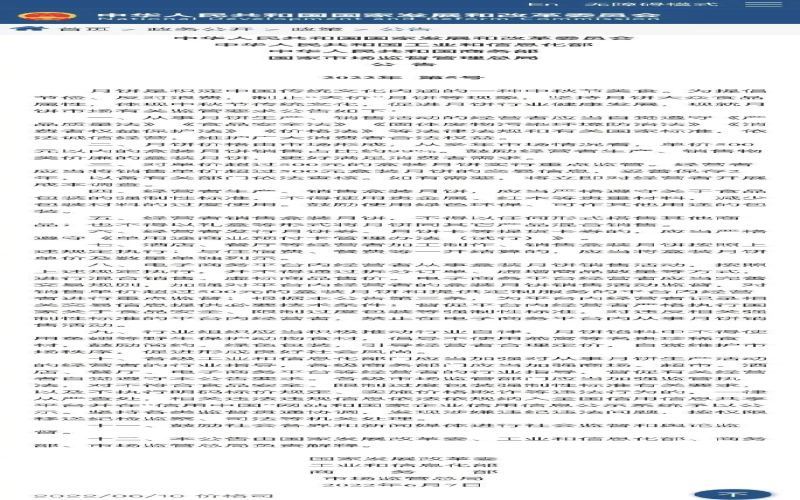
Four departments jointly crack down on the mooncake market: boxed mooncakes priced over 500 yuan will face focused regulation and cost investigations
As the Mid-Autumn Festival approaches, the mooncake market is about to enter its peak sales season. However, in recent years, the phenomenon of some boxed mooncakes being overpriced and luxuriously packaged has drawn widespread attention. The National Development and Reform Commission and three other departments recently jointly issued a notice, explicitly imposing key oversight on boxed mooncakes priced above 500 yuan per box, requiring operators to properly retain transaction information for two years, and strictly prohibiting the use of precious packaging materials such as precious metals and rosewood. For e-commerce platforms, the notice also stipulates that they must not indirectly drive up prices by splitting orders or inflating quantities. Consumers should stay rational when purchasing mooncakes and presale vouchers. This article summarizes the key points of the notice and includes a professional coffee knowledge exchange channel. Welcome to follow Coffee Workshop and Front Street Coffee. [more…]
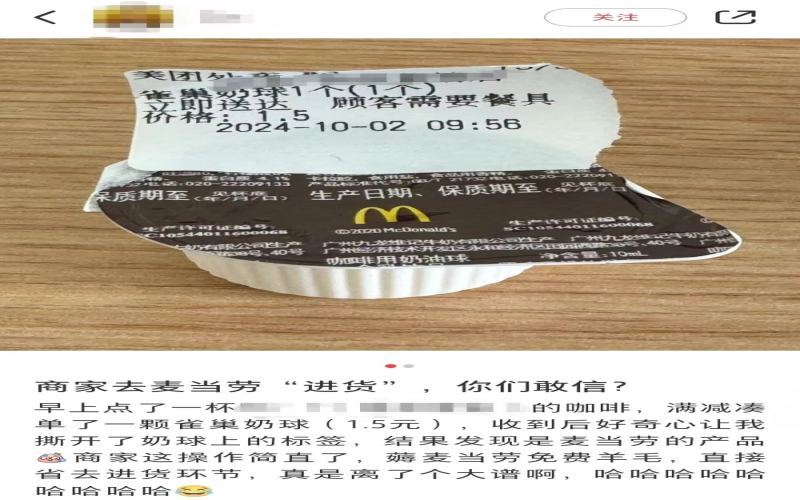
Coffee shop's 1.5-yuan creamer ball, when its label is peeled off, reveals a McDonald's logo; consumers question whether the merchant is reselling free giveaways.
When adding a milk ball to meet the minimum order for delivery, it seemed like an ordinary thing to do, but recently a consumer discovered something suspicious. To reach the minimum order amount, the customer spent 1.5 yuan at a coffee shop to buy a milk ball labeled "Nestlé." Upon receiving it, they tore off the delivery label and found that it was actually a milk ball with the McDonald's logo. This sparked many speculations: Did the merchant resell milk balls collected for free from McDonald's to customers? Some pointed out that there are suppliers in the market selling milk balls with brand logos, so it might not necessarily be from "freeloading." Moreover, sharp-eyed netizens noticed that the milk ball was neither Nestlé nor McDonald's, but a product from "Vitasoy." A tiny milk ball has brought up various topics about the supply of coffee industry accessories. [more…]
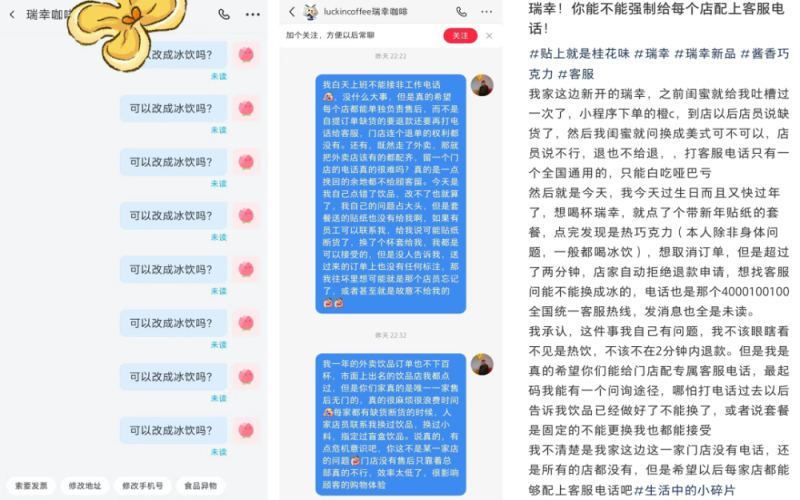
Limited Contact Channels for Luckin Stores Spark Debate: Customers Struggle to Reach Stores by Phone After Misoperations
When ordering on a food delivery platform, many consumers have experienced the mistake of confirming too quickly without carefully reading the options. Third-party platforms usually support time-limited cancellations, but if it is a merchant's own mini-program or app, the process for modifying or canceling an order is often more cumbersome, and many people's first instinct is to call the store directly. Recently, however, some customers have discovered that what is listed on the Luckin Coffee platform is not the store's direct line, but the national unified customer service hotline, making it difficult to reach the store level in a timely manner. This situation has sparked discussions about the contact information of chain brand stores, order modification and cancellation permissions, and has also brought to light the real conflict in communication efficiency between consumers and stores. [more…]
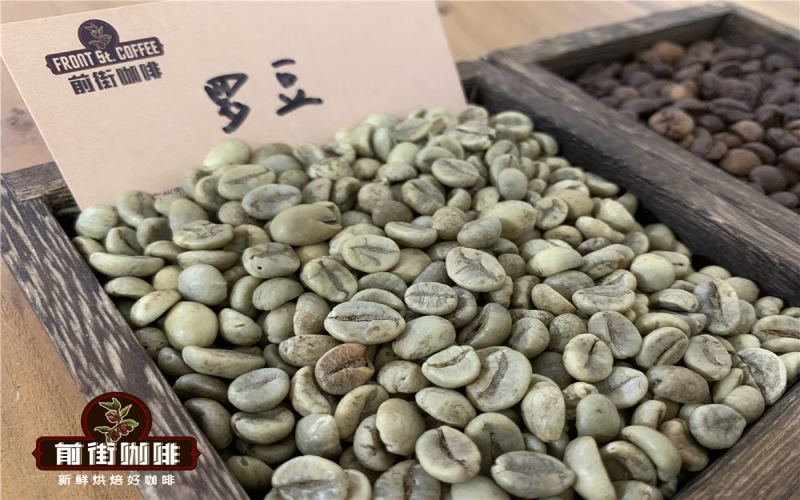
Does Robusta count as specialty coffee? Why is the price so low? How much does it cost per catty?
The coffee world is mainly divided into three major species: Arabica, Robusta, and Liberica, of which only the first two have commercial value. In the specialty coffee world, Robusta is almost entirely overlooked, and merchants often use 100% Arabica as a selling point. Robusta is often seen as a symbol of cheapness and bitterness, but it also had a glorious period, and today it is mostly used in instant coffee and espresso blends. This article will sort out Robusta's origins, flavor characteristics, differences from Arabica, and why it is cheap and how much it costs per catty, while retaining relevant recommendations from the Front Street brand to help coffee lovers gain a comprehensive understanding of this species. [more…]
Why Is Kopi Luwak So Expensive? Inside the Production Process and Scarcity of Indonesian Civet Coffee
In Java, Sumatra, Bali, and Sulawesi in Indonesia, Kopi Luwak is a highly distinctive traditional beverage. The raw material for this coffee comes from beans excreted by civets after they eat coffee cherries, and because it is difficult to obtain and the processing is cumbersome, the yield is extremely low. Indonesian pavilion staff member Shengzhen introduced that farmers will keep civets in cages, and some merchants even rent an entire island to let them range freely, but they cannot force them to eat or excrete, so the coffee beans obtained are especially precious. Only about 500 pounds are produced globally each year. After multiple strict hygiene processes such as sun-drying, roasting, and brewing, the finished coffee has a unique aroma, and the price is naturally high. The site also demonstrated the distillation method: 12 grams of Kopi Luwak with 50 to 55 grams of water produces the richest result, and the remaining coffee grounds are smooth with no small holes. At the Expo Indonesian pavilion, a 4-ounce cup of Kopi Luwak is priced at US$168, 20 grams costs 380 yuan, and a cup in Hong Kong also costs 220 to 298 yuan, which shows just how expensive it is. [more…]
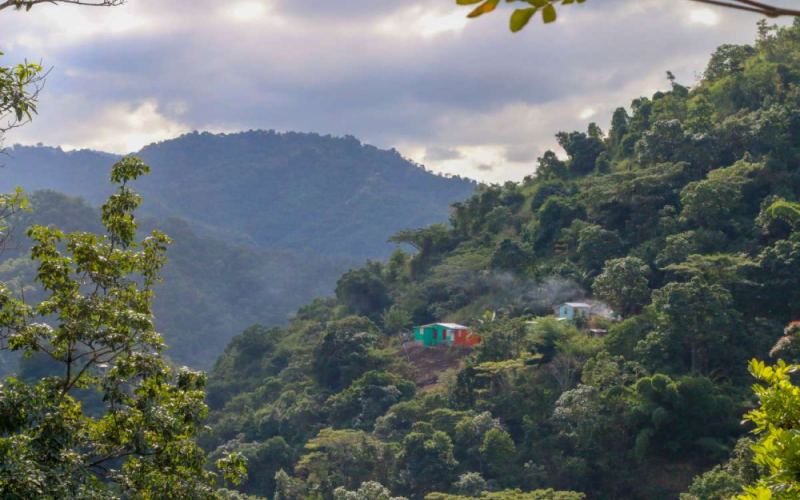
Jamaica Blue Mountain Coffee Pour-Over Complete Guide: Authenticity Identification, Parameter Settings, and Flavor Profile Analysis
Blue Mountain coffee is highly sought after for its exceptional quality and high price, but the market is flooded with a large number of counterfeit products. This article will start with authenticity identification and systematically explain how to identify genuine Jamaican Blue Mountain coffee beans, including key points such as origin certification, wooden barrel packaging, and certificate verification. Then, focusing on a 15-gram dose, a 1:15 ratio, and 87°C water temperature, it will demonstrate in detail the three-pour hand-brewing process and grind size requirements for Front Street Blue Mountain coffee. The article also particularly emphasizes the impact of water quality selection and bean freshness on flavor, and describes the balanced taste of Blue Mountain coffee with notes of nuts, chocolate, and cream. Whether you are trying it for the first time or hoping to refine your technique, this guide can help you fully unlock the true value of every expensive bean. [more…]
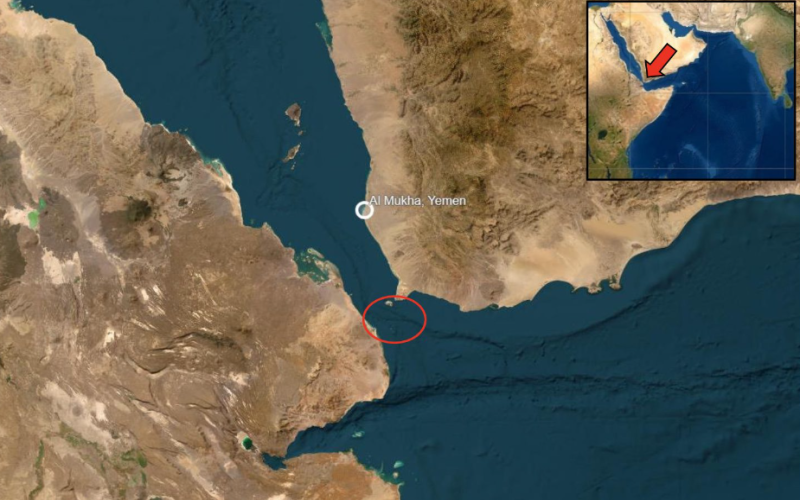
Red Sea Security Crisis Hits Global Coffee Supply Chain: Shipping Disruptions and Rising Prices
Recently, the Houthi armed forces in Yemen launched a large-scale attack on U.S. warships in the Red Sea. Although the U.S. military successfully intercepted the attack, the incident once again highlighted the tense situation in the Red Sea region. Since the escalation of the Israeli-Palestinian conflict last year, the Houthis have frequently attacked commercial ships, forcing global shipping routes to change and thereby having a profound impact on the coffee trade. Problems such as soaring transport costs, longer voyages, and container shortages followed one after another. European buyers turned to Brazil for purchases, East African coffee exports were hit hard, and international coffee prices continued to rise. This article will analyze in detail how the Red Sea crisis has disrupted the global coffee supply chain and discuss its specific impact on coffee-producing regions and consumer markets. [more…]
How Much Does a Cup of Kopi Luwak Cost? Which Brand Is the Highest-End and Most Authentic? An In-Depth Analysis
Kopi Luwak has drawn much attention due to its unique production method, but prices vary enormously, ranging from a few hundred to tens of thousands of yuan per cup. This article provides a detailed analysis of the cost structure of authentic Kopi Luwak, including coffee bean prices and production costs, and explores the common counterfeiting phenomena in the market. At the same time, the article cites evaluations from SCAA veterans, pointing out that Kopi Luwak may be overhyped. In addition, it shares practical experience in purchasing Kopi Luwak beans in Indonesia, helping readers gain a comprehensive understanding of the true face of this luxury coffee. [more…]